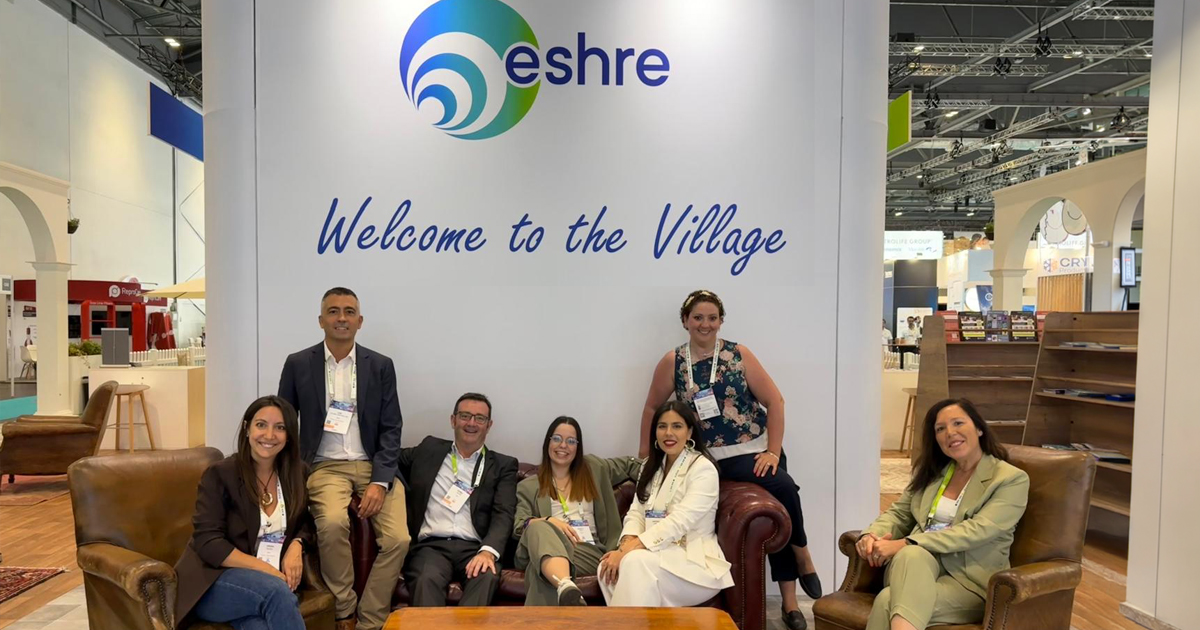
ESHRE 2026, held in London from July 5 to 8, is the largest European congress dedicated to reproductive medicine and genetics applied to assisted reproduction. This international meeting brings together thousands of gynecologists, embryologists, geneticists, researchers, and healthcare professionals each year with a common goal: to continue driving innovation to improve fertility treatments and patient care. For Bioarray, ESHRE 2026 has been an exceptional opportunity to share scientific knowledge, present our latest research, showcase our diagnostic solutions, and strengthen new collaborations with professionals from around the world.
Four days boosting reproductive genetics
Our stand was a meeting point for specialists interested in learning about the latest developments in genetic diagnosis applied to assisted reproduction.
During these four days we had the opportunity to exchange experiences with international clinics, laboratories and reproduction centers, sharing different approaches to the current challenges of fertility and the new tools available to optimize clinical practice.
Every conversation, every meeting, and every new contact reinforces our commitment to continue developing solutions based on innovation, scientific quality, and personalized medicine.
Bioarray Booth Talks: knowledge shared with international experts
One of the highlights of the congress was the Bioarray Booth Talks, a space designed to introduce attendees to some of the most current topics in assisted reproduction and reproductive genetics, presented by renowned international experts.
The program included four highly interesting scientific sessions:
It Takes Two: How the Seminal Microbiome Shapes the Couple’s Reproductive Dynamic
Ángela Díaz
Head of Research & Development, Bioarray
A presentation focusing on the role of the seminal microbiome and how its composition can influence the reproductive health of the couple and the results of fertility treatments.
Beyond Chromosome Counting: Detecting Hidden Triploidies in Apparently Normal 2PN Embryos
Aurora Chico
Technical Manager & Field Application Scientist, Journey Genomics
During this session, advances in genetic diagnosis were analyzed, enabling the detection of hidden triploidies in apparently normal embryos, thus improving the accuracy of embryo selection.
Giving ‘Chaos’ a Second Chance: Rescue Rates and Outcomes in Segmental Embryo Rebiopsies
Dr. Yosu Franco Iriarte
Laboratory Director, Reproductive Medicine Unit, Ruber Internacional Hospital
A review of the clinical utility of segmental embryo rebiopsy and the results obtained in embryos initially considered complex.
Mitigating Reproductive Risk Through Proactive Donor Screening and Matching
Nanna Humle
Person Responsible & Quality Manager, Born Donor Bank, Dinamarca
The session highlighted the importance of genetic screening of donors and matching strategies to reduce genetic risks and increase the safety of reproductive treatments.
The Booth Talks generated great interest among attendees and fostered an enriching exchange of knowledge among professionals from different countries, consolidating this space as one of the main scientific meeting points within the Bioarray stand.
A new scientific poster on the reproductive microbiome
Bioarray’s scientific activity during ESHRE 2026 was also marked by the presentation of a scientific poster accepted by the congress’s scientific committee.
The work, entitled:
From seminal dysbiosis to endometrial resilience: High-resolution metagenomics, sperm DNA integrity and couple dynamics
It addresses one of the most interesting emerging areas within reproductive medicine: the influence of the seminal microbiome on reproductive success.
The research explores the relationship between the microbiota present in semen, the integrity of sperm DNA, and the female reproductive environment, offering a comprehensive view of couple fertility.
Thanks to the use of high-resolution metagenomic tools, the study provides new evidence on how seminal dysbiosis can influence both male reproductive health and endometrial resilience, expanding our understanding of factors that could affect reproductive outcomes.
The acceptance of this work by ESHRE represents recognition of Bioarray’s commitment to scientific research and the development of new evidence-based diagnostic tools.
Innovative solutions for assisted reproduction
During the congress, we also presented attendees with our comprehensive solutions for genetic diagnosis in assisted reproduction, designed to support clinics at every stage of the reproductive process.
Among them are:
- Preimplantation Genetic Diagnosis, PGT-A and its different modalities.
- Carrier Screening for the study of carriers.
- BioER endometrial receptivity test.
- Studies of vaginal and endometrial microbiota using Bioarray MicrowaVE.
- Male and female infertility panels.
- Specialized genetic counseling.
Our goal remains to provide innovative diagnostic tools that enable professionals to make increasingly precise and personalized decisions, contributing to improved clinical outcomes and the chances of success in assisted reproduction treatments.
Thank you for joining us in London
We would like to express our gratitude to all the professionals who visited our stand,
attended the Bioarray Booth Talks and shared these days with our team.
Every conversation, every collaboration, and every exchange of knowledge represents a new
opportunity to continue growing and driving innovation in reproductive genetics.
We would also like to extend a special thank you to our speakers for sharing their expertise and contributing to the success of these scientific sessions.
See you at ESHRE 2027
We leave London satisfied to have been part of, once again, one of the world’s most important scientific events in reproductive medicine.
We’re back with new ideas, new projects, and the motivation to continue developing solutions
that help professionals and patients face the challenges of assisted reproduction with greater
precision and confidence.
Thank you to everyone who was part of ESHRE 2026.
See you in Stockholm for ESHRE 2027.
If you would like to learn more about Bioarray’s reproductive genetics solutions, our team
will be happy to help you find the best option for your laboratory or clinic.