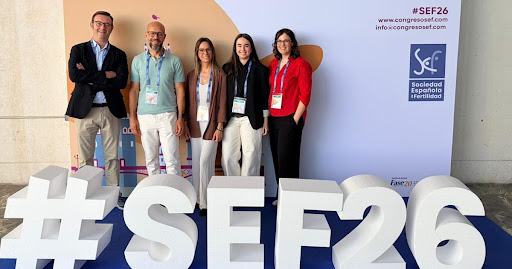
The National Congress of the Spanish Fertility Society, held in Seville, has once again become a major meeting point for professionals in reproductive medicine, embryology, genetics, and assisted reproduction.
At Bioarray, we return from #SEF26 with a clear feeling: it was worthwhile to share knowledge, experiences, and scientific advances with colleagues, collaborators, and specialists in the sector.
Yes, you’ve probably seen dozens of similar photos these days. And to be fair, in addition to the excellent scientific organization of the congress, the photo booth also helped quite a bit 📸.
But beyond the images, what was truly important was everything experienced during these days: conversations, learning, new perspectives, and the drive to continue working to offer increasingly precise and useful genetic diagnostic solutions for patients and assisted reproduction clinics.
A Key Meeting for Reproductive Medicine
SEF has established itself as one of the leading congresses in assisted reproduction and fertility in Spain. The 2026 edition brought together specialists from multiple disciplines to discuss the current and future challenges of reproductive medicine.
During the congress, advances related to:
- Reproductive genetic diagnosis
- PGT-A and embryo selection
- Vaginal and endometrial microbiota
- Endometrial receptivity
- Personalized medicine
- New bioinformatics strategies applied to fertility
At Bioarray, we believe that these types of meetings are essential to continue advancing towards more precise, personalized, and evidence-based assisted reproduction.
Bioarray Presents Four Research Papers in Oral Communications
In addition to our participation in the congress, this year we had the opportunity to present four research papers in oral communication format at SEF 2026:
- “From Seminal Dysbiosis to Endometrial Resilience: A High-Resolution Metagenomic Approach to Sperm DNA Integrity and Couple Dynamics” — Dr. Luis Alcaraz.
- “Overcoming Limitations in PGT-M for Copy Number Variants (CNVs): High-Resolution Haplotype Analysis and Redefinition of Deletion Cut-off Points in SLC25A46 Without Reference Relatives” — Aitana Seller.
- “Resolution of a Recurrent Microdeletion of ‘Unknown’ Origin by PGT-M: Detection of Maternal Germline Mosaicism Through SNP-Based Haplotype Analysis” — Paula Brígido.
- “The Vaginal Microbiome as a Critical Determinant in Endometrial Therapeutic Strategy: From Correlation to Clinical Management in Assisted Reproduction” — Ángela Díaz.
These investigations reflect Bioarray’s commitment to innovation, applied research, and the development of precision diagnostic tools with real clinical impact.
We Return to the Laboratory with Renewed Motivation
Beyond technology and innovation, congresses like SEF 2026 remind us of the importance of collaborative work among professionals, laboratories, and clinics.
We return to the laboratory motivated, happy, and with new ideas to continue developing genetic diagnostic solutions applied to assisted reproduction and personalized medicine.
We also want to congratulate all colleagues, researchers, and professionals who participated in this edition for the immense scientific and human quality shared during the congress.
Thank you SEF 2026, see you at the next edition
From Bioarray, we want to thank the organization of the Spanish Fertility Society for an excellent edition, both scientifically and personally.
We will continue working to promote reproductive genetics and molecular diagnostic tools that help improve clinical precision and the reproductive opportunities for each patient.
See you at the next edition 🤓
More information about our reproductive genetics and advanced diagnostic solutions at Bioarray: https://bioarray.pe